Building a stock watchlist that supports smarter decisions in Palakkad
Why a watchlist matters more than you think
Most investors start their day by glancing at stock prices. A few green numbers, a few red ones, and they move on. But price movement alone tells you very little about whether a stock deserves a place in your portfolio. A well-constructed watchlist shifts the focus from daily noise to the factors that actually drive long-term returns. It turns a list of tickers into a decision-support tool.
The trouble is that many watchlists are little more than a collection of familiar names. They lack structure, criteria, and a clear reason why each stock is there. Without those elements, the list becomes a distraction rather than an aid. The goal is to build something that helps you act with conviction when the time comes to buy, hold, or sell.
Start with your investment thesis, not with stock names
Before you add a single ticker, decide what kind of investor you are. Are you looking for steady dividend income, long-term capital appreciation, or short-term trading opportunities? Each approach demands a different set of filters. A growth investor cares about earnings momentum and revenue expansion. A value investor looks for low price-to-earnings ratios and strong balance sheets. An income investor focuses on dividend yield and payout consistency.
Tickspike Markets is also on YouTube.
Write down your core criteria. This becomes the filter that every candidate must pass. Without a thesis, you end up with a random assortment of stocks that have no relationship to your goals. Your watchlist should reflect a strategy, not a whim.
Use screening filters to narrow the field
Once you know what you are looking for, turn to screening filters. These are the tools that let you scan thousands of stocks for the ones that meet your requirements. Common filters include market capitalization, sector, price performance over a chosen period, and valuation ratios. If you are focused on earnings growth, set a minimum year-over-year increase. If you prefer large, stable companies, set a floor for market cap.
The trick is to avoid over-filtering. Too many criteria can leave you with zero results. Start broad, then tighten gradually. The purpose of the screen is to produce a manageable shortlist, not to eliminate every stock in the market. Aim for ten to twenty candidates that you can research in depth.

Evaluate each candidate on quality metrics
A screening filter can flag stocks that meet numerical thresholds, but it cannot tell you whether a business is well run or whether its competitive position is sustainable. That is where fundamental analysis comes in. For each stock on your shortlist, examine quality metrics such as return on equity, debt-to-equity ratio, operating margin trends, and free cash flow generation. These figures reveal how efficiently a company uses its capital and how resilient it is during downturns.
Pay attention to consistency. A company that has grown earnings steadily for five years is less risky than one that shows erratic spikes and drops. Look at the trend, not just the latest quarter. If the numbers are strong, the stock earns a place on your watchlist. If they are weak or deteriorating, move on.
Compare against peers, not just the market
A stock can look impressive on its own but still be the weakest player in its industry. Peer comparison gives you context. Compare the candidate's valuation, growth rate, and profitability against three or four direct competitors. If the stock trades at a premium but its fundamentals are average, you may be looking at a popular name that is not backed by substance.
Peer analysis also helps you spot opportunities. Sometimes the best pick in a sector is not the most famous one. A smaller competitor with a strong balance sheet and faster growth can offer better value. Your watchlist should reflect the best risk-reward profile in each industry you follow, not just the household names.
Track price performance with purpose
Price performance is a useful signal, but only when you understand what drives it. A stock that has risen 30 percent in a year may be riding a sector trend rather than improving its own business. Conversely, a stock that has fallen may be undervalued if the decline is due to a temporary setback.
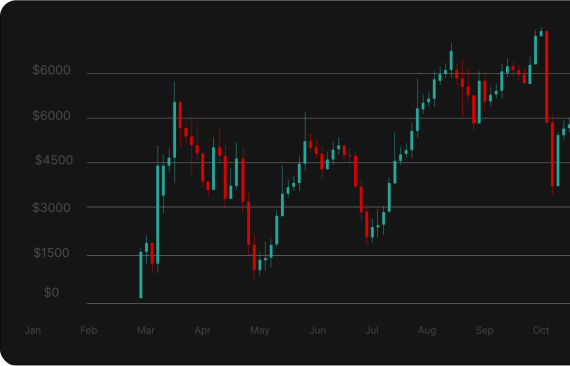
Set up your watchlist to show price performance over multiple time frames: one month, three months, one year, and five years. This gives you a sense of momentum and volatility. Combine that with the fundamental data you already collected. If the price is rising and the fundamentals are improving, the stock may still have room to run. If the price is falling and the fundamentals are deteriorating, it may be time to remove it from your list.
This approach gives you a clearer way to track stocks because it ties price movement to underlying business health rather than treating price as an isolated number.
Maintain a clear investment thesis for each entry
Every stock on your watchlist should have a written thesis. One or two sentences that state why you own it, what you expect from it, and under what conditions you would sell. This discipline prevents emotional decisions. When the stock drops, you can check your thesis. If the reasons you bought it are still intact, you hold. If they have broken, you sell.
The thesis also helps you avoid holding too many similar names. If you already own three banks, adding a fourth is unlikely to improve your portfolio allocation. Your watchlist should reflect diversification across sectors, geographies, and investment styles.
Review and refresh regularly
A watchlist is not a static document. Companies change, industries evolve, and your own investment criteria may shift. Set a regular review schedule. Once a month, go through each stock and check whether it still meets your filters. Remove those that no longer qualify. Add new candidates that pass your screen.
During the review, pay attention to earnings releases and corporate events. A company that has issued profit warnings, changed its dividend policy, or undergone a management shake-up may no longer fit your thesis. Do not be afraid to cut a stock that has served its purpose. Holding onto a name out of familiarity is one of the easiest ways to let your watchlist become stale.
For investors who want a clearer way to track stocks across multiple asset classes, dedicated research platforms can help. They consolidate screening, fundamental analysis, and portfolio tools into one interface, reducing the time spent jumping between spreadsheets and broker screens.
Integrate the watchlist with your portfolio allocation
Your watchlist should not exist in isolation. It feeds directly into your portfolio decisions. If you are overweight in technology, adding another tech stock even with strong metrics may concentrate risk. Use your watchlist as a pipeline of candidates that you evaluate against your current holdings. The question is not just "Is this a good stock?" but "Is this a good addition to my portfolio right now?"
One practical method is to set target allocation percentages for each sector. When a sector is underweight, look at the watchlist candidates in that area. When it is overweight, focus on other opportunities. This keeps your portfolio balanced and prevents you from chasing hot sectors at the wrong time.
A watchlist built this way becomes a tool for deliberate, informed action. It reduces the noise, clarifies your criteria, and helps you act on your own research rather than on headlines. The effort you put into constructing it pays off every time you make a buy or sell decision.
Tickspike Markets, based at 44/89 RAMANIKA, Thirupurakkal Colony, Melamuri, Palakkad, Keralam 678012, India, can be reached at +91-7411498895 for those seeking professional investment research tools.